Plenary Speakers
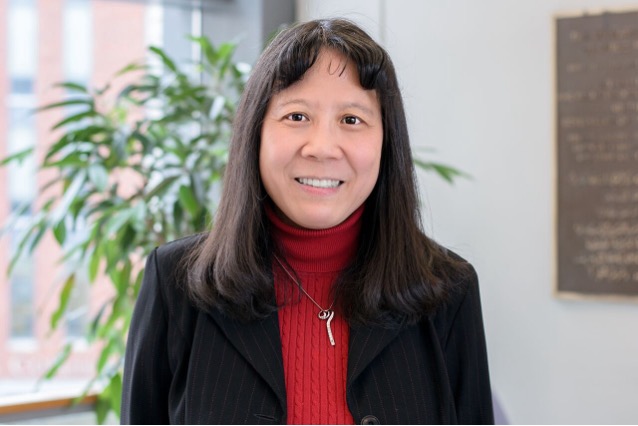
Xihong Lin
“From Generative AI to Statistical Inference: Harnessing Synthetic Data for Validity and Power”
Harvard University
Website →
View abstract & bio
Hide details
Xihong Lin
“From Generative AI to Statistical Inference: Harnessing Synthetic Data for Validity and Power”
Harvard University
Website → View abstract & bio Hide detailsAbstract
The integration of statistics and generative AI plays a pivotal role in accelerating trustworthy, cross-domain scientific discovery. Recent advances in generative models have dramatically expanded the availability and use of synthetic data across scientific domains. While these developments create exciting opportunities to enhance data analysis, they also raise fundamental statistical challenges regarding how synthetic data can be used in a valid, reliable, and principled manner. In this talk, we first discuss the generation of high-fidelity, high-dimensional synthetic data for real-world applications using generative AI models, including transformers, diffusion models, and latent flow-matching models. We then present a principled framework for integrating observed and synthetic data in downstream analyses to ensure valid statistical inference, even when generative AI models are misspecified. Specifically, we introduce synthetic-data-assisted methods for continuous and discrete outcomes based on an augmented synthetic data likelihood that integrates observed and synthetic data. We show that these methods are robust to misspecification of black-box generative models and can improve statistical power when the generative models provide informative synthetic data. We demonstrate the utility of these methods through applications to UK Biobank data, including genome-wide association studies (GWAS) of proteomic data, whole-genome sequencing (WGS) analyses of brain imaging phenotypes, and analyses of binary mental health survey outcomes. These applications involve substantial missingness, with approximately 70–90% of the relevant data missing, highlighting the potential of synthetic-data-assisted methods to enable more powerful and reliable scientific discovery in challenging real-world settings.
Bio
Xihong Lin is Professor and former Chair of Biostatistics, Professor and Chair of Statistics at Harvard University, and the Coordinating Director of the Program in Quantitative Genomics at Harvard School of Public Health. Dr. Lin works on the development and application of integrating statistical, machine learning and generative AI methods for the analysis of massive and complex genetic, genomic and health data. Dr. Lin is an elected member of the US National Academy of Sciences and the US National Academy of Medicine. She received the Presidents’ Award and the FN David Award from the Committee of Presidents of Statistical Societies (COPSS), the Mortimer Spiegelman Award and the Lowell Reed Lecture Award from the American Public Health Association, the Jerome Sacks Award for Outstanding Cross-Disciplinary Research from the National Institute of Statistical Science, and the Marvin Zelen Leadership in Statistical Science Award. She is an elected fellow of American Association for the Advancement of Science, American Statistical Association, Institute of Mathematical Statistics, and International Statistical Institute. She is the President-Elect of the Institute of Mathematical Statistics. Her research has been supported by several NIH grants, including the NCI MERIT (R37) and Outstanding Investigator (R35) Awards.
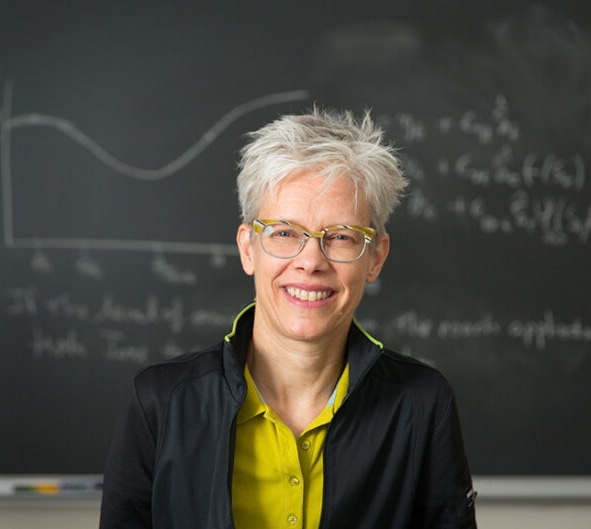
Susan Murphy
“Reinforcement Learning for Digital Health Interventions in the Dyadic Setting”
Harvard University
Website →
View abstract & bio
Hide details
Susan Murphy
“Reinforcement Learning for Digital Health Interventions in the Dyadic Setting”
Harvard University
Website → View abstract & bio Hide detailsAbstract
We present our ongoing work on the development of an online reinforcement learning (RL) algorithm for dyadic digital intervention settings in which the task for the RL algorithm is to assist the target person, with a difficult illness, remain adherent to needed behavioral activities. To achieve this goal the RL algorithm will not only deliver digital interventions to the target person but also deliver interventions to assist the carepartner to manage caregiving burden and help the two individuals improve their relationship. That is, different RL components target different elements of the dyad. The RL algorithm is a multi-agent RL algorithm in which the 3 agents make decisions on the 3 elements of the dyad. We incorporate domain knowledge in the form of approximal causal directed acyclic graphs to speed up online learning in this sparse data setting. This work is motivated by our development of the ADAPTS-HCT multi-agent RL algorithm, designed to improve medication adherence by young adults who have undergone a blood and bone marrow transplant. The RL algorithm is currently being deployed in a trial.
Bio
Susan A. Murphy is Mallinckrodt Professor of Statistics and of Computer Science and Associate Faculty at the Kempner Institute, Harvard University. Her research focuses on improving sequential decision making via the development of online, real-time reinforcement learning algorithms. Her lab is involved in multiple deployments of these algorithms in digital health. She is a member of the US National Academy of Sciences and of the US National Academy of Medicine. In 2013 she was awarded a MacArthur Fellowship for her work on experimental designs to inform sequential decision making. She is a Fellow of the College on Problems in Drug Dependence, Past-President of Institute of Mathematical Statistics, Past-President of the Bernoulli Society and a former editor of the Annals of Statistics.
Banquet Speaker
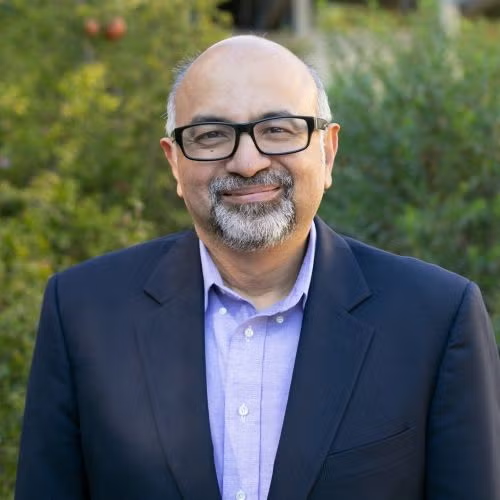
Sudipto Banerjee
“Carbs, Calories, and Computation: Serving Up Statistical Inference in the AI Ecosystem”
University of California, Los Angeles
Website →
View abstract & bio
Hide details
Sudipto Banerjee
“Carbs, Calories, and Computation: Serving Up Statistical Inference in the AI Ecosystem”
University of California, Los Angeles
Website → View abstract & bio Hide detailsAbstract
Tonight, I will share my perspectives on the profound paradigm shift currently taking place in data analysis, driven by the rapid growth of artificial intelligence technologies. At a time when many in the statistical community are, perhaps understandably, feeling somewhat insecure about the future of our discipline, I will argue that the evolution of AI actually offers an expansive intellectual frontier. Rather than displacing us, statistical methods will not merely co-exist with machine learning and computer science, but will serve as the crucial engine driving probabilistic inference at unprecedented scales. To illustrate this, I will elucidate a basket of ideas that synthesize into an artificially intelligent inferential system. The first two—amortized inference for training generative AI frameworks on complex data, and transfer learning for scaling inference to massive datasets—operate as two sides of the same coin: achieving unparalleled computational efficiency through memory. The third idea, predictive stacking, builds upon this foundation to deliver exact, simulation-based inference without resorting to expensive iterative methods. Finally, I will bring these synthesized concepts to life through a real-time case study in spatial energetics. Drawing on streaming mobile health data from wearable devices in the UCLA PASTA-LA project, I will demonstrate how these methods unlock real-time insights into a subject’s metabolic levels as a function of their mobility, ultimately showing how the synergy of Statistics and AI drives tangible public health innovations.
Bio
Sudipto Banerjee, Ph.D., is a Professor in the Department of Biostatistics and the Department of Statistics & Data Science at the University of California, Los Angeles (UCLA). He currently serves as the Senior Associate Dean at the UCLA Fielding School of Public Health and holds an affiliate appointment in the UCLA Institute of the Environment and Sustainability. Prior to his current leadership role, he served as the Chair of the UCLA Department of Biostatistics from 2014 through 2023. Dr. Banerjee is a globally recognized leader in spatial statistics and Bayesian modeling. His pioneering research focuses on developing statistical machine learning methods and Bayesian inference for complex systems involving massive datasets (“BIG DATA”). His methodologies are widely utilized in spatial data science, spatial epidemiology, and to analyze how environmental processes impact public health. A prominent voice in the statistical community, Dr. Banerjee served as the President of the International Society for Bayesian Analysis (ISBA) in 2022. His extensive scholarly contributions have earned him numerous prestigious honors, including the Mortimer Spiegelman Award from the American Public Health Association, the George W. Snedecor Award from the Committee of Presidents of Statistical Societies (COPSS), and the Jerome Sacks Award for Outstanding Cross-Disciplinary Research from the National Institute of Statistical Sciences (NISS). Dr. Banerjee is an elected Fellow of the American Statistical Association (ASA), the Institute of Mathematical Statistics (IMS), ISBA, and the American Association for the Advancement of Science (AAAS).